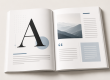
In a children's picture book, the layout is not just a container for the story—it is the story. The delicate dance between words and images guides a child's imagination, making the turn of a page an act of discovery. While creating this visual narrative for print is a significant achievement, translating that same carefully crafted experience to the digital world of e-readers, tablets, and phones requires specialized technical expertise.
This final conversion and layout stage is where a beautiful manuscript becomes a professional, marketable book. It ensures your story shines for young readers everywhere, on any device.
Why Professional Interior Layout is Crucial for Children's Books
A thoughtfully designed interior does more than just place text next to a picture; it controls the story's pacing and rhythm. Professional layout uses page breaks and spreads to build suspense, create dramatic reveals, and guide the reader’s eye. The arrangement ensures text and illustrations complement each other, working together to create a cohesive and immersive experience.
The challenge multiplies when moving from a static print book to dynamic digital formats. A two-page spread that looks stunning on a large tablet can become disjointed and unreadable on a smaller e-reader. While many authors collaborate with talented illustrators from studios like Design Kompanie to create the artwork, the final technical formatting for digital platforms is a separate and essential step that protects the book's artistic integrity [1].
The Core Challenge: Fixed Layout vs. Reflowable EPUB
When preparing a book for digital sale, the most critical decision is the format. For illustrated children's books, this choice determines whether your artistic vision is preserved or lost in translation across devices.
Understanding Fixed Layout EPUB
A fixed layout EPUB is a digital replica of your print book. It locks text and images into precise positions, guaranteeing that every page appears exactly as you and your illustrator intended, regardless of the device. This format is the industry standard for picture books, comics, and other image-heavy content where the spatial relationship between elements is fundamental to the story. It preserves two-page spreads and maintains the integrity of the original design.
Understanding Reflowable EPUB
In contrast, a reflowable layout allows text to "flow" and adjust to different screen sizes and user settings, such as font size. While this format is perfect for text-heavy novels and non-fiction, it is fundamentally unsuited for picture books. A reflowable format would break apart carefully designed spreads and separate illustrations from their corresponding text, completely dismantling the intended reading experience.
Key Technical Requirements for Children's Book Layout
A professional children's book interior layout with illustrations must meet strict technical standards to succeed in both print and digital marketplaces. While you can find endless creative inspiration from portfolios on Behance, executing that vision correctly requires technical precision [2].
Spreads, Bleed, and Margins
A robust layout starts with a solid structural foundation.
- Two-Page Spreads: Picture books are often designed around two-page spreads, where a single illustration flows across the left and right pages. This creates an immersive, panoramic scene that is central to the storytelling.
- Bleed: Illustrations that run to the very edge of the page must extend about 0.125 inches beyond the final trim line. This extra margin, or "bleed," ensures no unprinted white slivers appear after the physical book is trimmed.
- Margins and Gutter: It is vital to keep important text and key visual details away from the page edges (margins) and especially the center spine area (the "gutter"), where they can be obscured or lost in the binding. Foundational guides on these principles are an excellent resource for authors learning about picture book design [3].
Image Specifications and Quality
The quality of your final book is directly linked to the quality of your source image files. Different platforms have strict rules, and failure to comply can lead to a poor user experience or outright rejection. Ensure your files meet these key requirements:
- Resolution: For crisp print quality, all images must have a resolution of at least 300 DPI (dots per inch).
- File Format & Size: Platform requirements vary significantly. For instance, Amazon Kindle has specific guidelines recommending JPEG files and limiting individual images to under 5 MB.
- Dimensions: Some retailers set minimum image dimensions. Adhering to iBooks formatting best practices, for example, means ensuring images are at least 1400 pixels on their shortest side.
Typography and Text Placement
Text must be clear, legible, and integrated seamlessly with the artwork. Choose a font that is readable and, crucially, licensed for embedding in an ebook (typically an OTF or TTF file). Rather than forcing a font color that might clash with the background, text should be carefully placed over areas of the illustration that provide sufficient contrast for easy reading. This is a key focus for specialists in inside book design and freelance designers found on platforms like Upwork [4] [5].
Our Process: Expert Conversion for Multi-Platform Success
At Geethik Technologies, we transform your completed design into a flawless digital product ready for a global audience. Our process is built on deep technical expertise and an uncompromising commitment to quality.
From Any Source to Any Platform
We offer professional multi-platform eBook conversion and formatting services. We can work with a wide variety of source materials, including PDFs, app files, and even high-quality scans of printed books. From these, we create pixel-perfect digital editions that perform reliably across all major e-reading platforms, including Apple iPad, Kindle, Google Play, Kobo, and Nook. For projects that demand absolute fidelity, we produce print replica ebooks that perfectly preserve your original layout.
The Power of an XML-First Workflow
Our XML-driven production pipeline is a key differentiator. By first structuring your book's content in XML, we create a single, clean, and adaptable master file. This robust, future-proof method allows us to efficiently generate flawless files for multiple digital formats, avoiding the errors and inconsistencies that often arise from manual conversions.
Enhanced Features and Quality Assurance
We can enhance your ebook with value-added features like optional embedded audio for read-aloud narration. Most importantly, every project is backed by a rigorous quality assurance process. Our workflow includes extensive compatibility testing across a wide range of devices and two rounds of manual, character-by-character proofreading to ensure every page of your book displays perfectly for every reader.
Partner with Geethik for Your Children's Book Layout
Bringing a children's book to the world requires both artistic vision and technical precision. Don't let your beautiful story fall short at the final technical hurdle. Our expertise in children's book interior layout with illustrations ensures your creative vision is protected and delivered flawlessly across all digital storefronts.
With a streamlined XML-first process and guaranteed multi-platform performance, we provide the expert technical foundation your story deserves. Explore our full range of typesetting and ePub conversion services or browse our blog for more publishing insights.
Ready to bring your children's book to life on every platform? Contact us today to get started.
Citations
- [1] https://www.upwork.com/services/product/design-creative-children-s-book-design-custom-interior-cover-art-for-kids-1741524226584059904
- [2] https://blueberryillustrations.com/inside-book-design
- [3] https://www.designkompanie.com
- [4] https://www.behance.net/search/projects/children%20book%20layout%20series
- [5] https://www.bookdesignmadesimple.com/design-a-childrens-picture-book